
The short answer
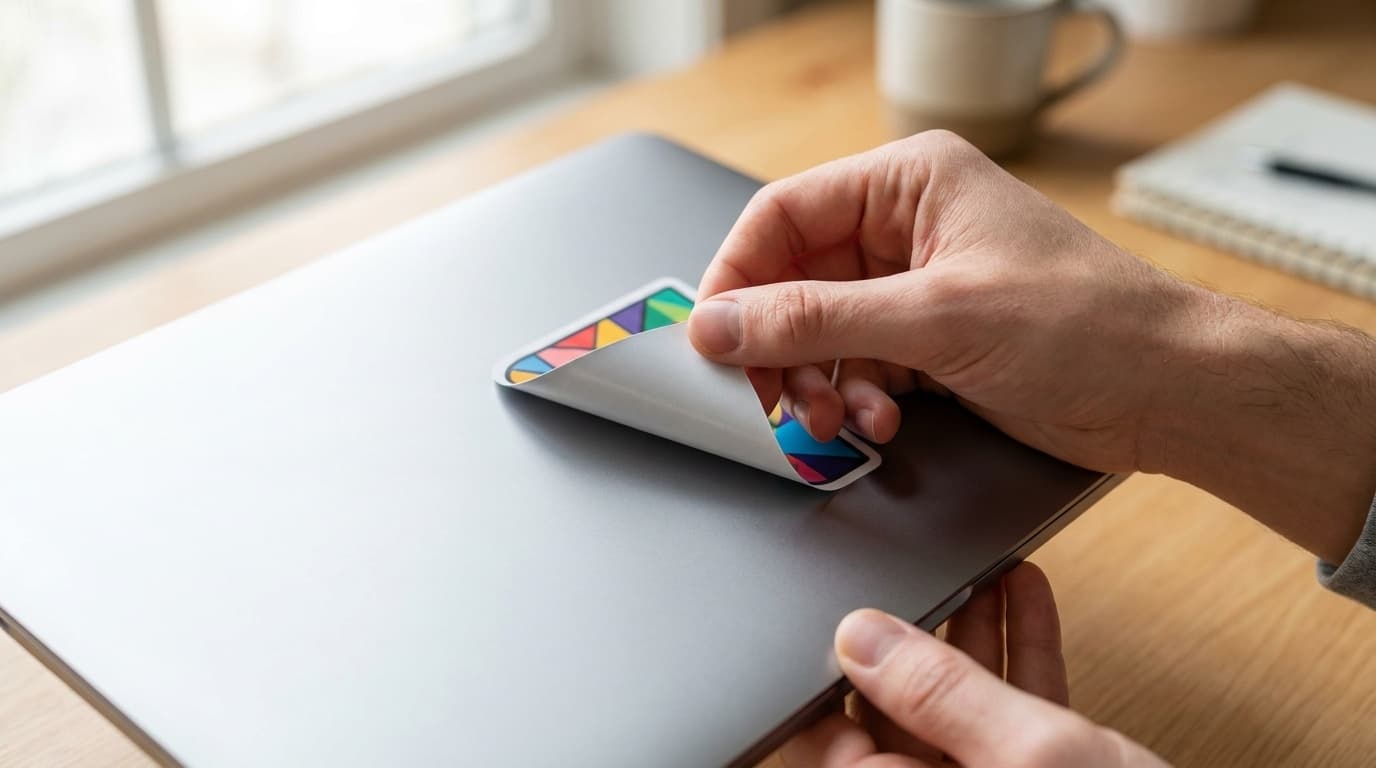
Warm the sticker, peel it low and slow, then dissolve whatever is left. Twenty seconds with a hairdryer softens the adhesive so the sticker comes off in one piece instead of splitting. What changes by surface is the finishing product: rubbing alcohol on glass and laptops, an automotive-safe oil-based remover on car paint, soapy water or cooking oil on plastic — and on walls, nothing but patience.
How do you remove stickers without leaving residue?
Residue happens when the adhesive splits — part stays with the sticker, part stays on the surface. Cold adhesive is brittle and splits easily; warm adhesive stays cohesive and releases as one layer. That single fact is behind every step of the method:
- Warm the sticker. Heat the sticker with a hairdryer on low for 20 to 30 seconds, keeping the dryer moving. Warm adhesive releases from the surface instead of splitting apart.
- Lift a corner. Work a fingernail, plastic card, or plastic scraper under one corner. Never use a metal blade on paint, plastic, or any coated surface.
- Peel low and slow. Pull the sticker back over itself at a low angle, slowly. Fast, upward yanks are what tear the vinyl and leave adhesive behind. Re-warm as you go if it starts to resist.
- Dissolve any leftover residue. Wipe remaining adhesive with the right remover for the surface: rubbing alcohol for glass and laptops, an automotive-safe oil-based remover for car paint, soapy water or cooking oil for plastic.
- Wash and dry the surface. Clean off the remover with soap and water, then dry. On a car, follow with a coat of wax on the treated area.
The peel angle matters more than people expect. Pulling a sticker straight up concentrates all the force on a thin line of adhesive and tears it; folding the sticker back over itself and pulling parallel to the surface shears the adhesive off cleanly. Slow beats strong, every time. The same technique in reverse is what makes application work — our installation guide is this article's mirror image.
How do you remove sticker residue from glass or windows?
Glass is the easiest surface on this list — it's non-porous, hard, and shrugs off every solvent you'd reasonably use. Peel the sticker with the warm-and-slow method, then soak whatever residue remains with warm soapy water or rubbing alcohol. Give it a full minute to penetrate, then wipe with a cloth or scrub with the rough side of a sponge.
For a patch that laughs at solvents — years-old adhesive baked on by sun — plain glass allows the one tool banned everywhere else: a razor blade. Hold a fresh blade nearly flat against the glass, wet the area first, and slide it under the residue in short strokes. Wet glass plus a shallow angle means the blade glides instead of gouging.
Two exceptions: never use a blade on tinted car windows — the tint is a plastic film on the inside surface that scratches instantly — and skip it on any glass with a coating, like anti-glare or low-E film. There, stick to alcohol and patience. And if the “sticker” on your window is actually a cling, good news: window clings have no adhesive at all and peel off bare-handed.
How do you remove sticker residue from a car without damaging paint?
Everything on car paint is the universal method with the caution turned up. Heat the sticker a little longer — 30 to 45 seconds, keeping the dryer moving so no spot gets hot enough to hurt — then lift an edge with a fingernail or a plastic card and peel back over itself as slowly as you can stand. If it fights you, stop and re-warm rather than pulling harder.
For the residue, use an automotive-safe oil-based remover (Goo Gone Automotive is the standard answer) or isopropyl alcohol on a microfiber cloth. Both dissolve adhesive without touching a cured clear coat. What they do strip is wax — so wash the area with soap and water afterward and finish with a fresh coat of wax on that panel.
The two things that actually damage paint during sticker removal: metal blades, and aggressive solvents like acetone or lacquer thinner. Skip both and the worst realistic outcome is a clean panel that needs waxing.
How do I get sticker residue off my laptop without ruining the finish?
Peel the sticker with gentle fingernail pressure — laptops rarely need heat, and a hairdryer near electronics deserves restraint anyway. If you do warm it, a few seconds on low is plenty.
For residue, 70% isopropyl alcohol on a barely-damp microfiber cloth is the safe answer on anodized aluminum, painted metal, and most laptop plastics. It dissolves adhesive fast and evaporates before it can creep anywhere. Rub in small circles, then buff dry. Keep every liquid away from ports, vents, speaker grilles, and the keyboard.
The one product to keep far away is acetone — it dissolves plastic surfaces, printed logos, and keyboard lettering on contact. Oil-based removers work but leave a film you'll have to wash off a surface you can't exactly rinse, so alcohol first. Planning to re-sticker the lid afterward? Our die cut stickers use a removable-grade adhesive precisely so this whole article stays easy.
How do you remove sticker residue from plastic or stainless steel?
These two get grouped together and shouldn't be — one is nearly indestructible and the other is the easiest surface to ruin with the wrong bottle from under the sink.
- Stainless steel. Almost anything works: rubbing alcohol, oil-based removers, or the pantry version — a paste of baking soda and cooking oil rubbed in with a cloth. Work with the grain of the metal, then wash with dish soap to lift the oily film. Skip abrasive scouring pads, which leave swirl marks.
- Plastic. Start gentle: warm soapy water, then plain cooking oil, which softens adhesive without touching the plastic. Rubbing alcohol is usually fine but can cloud or streak some plastics — test a hidden spot first. Acetone is an absolute no; it melts and fogs most consumer plastics on contact.
Water bottles live in this section too: stainless bottles take the stainless treatment, and any oily residue remover should be followed by a proper soapy wash before the bottle goes back in rotation. If the sticker fought hard on the way off, that's the laminate doing its job — the same layer that keeps a sticker alive for 5+ years makes it peel as one piece instead of flaking.
Will car stickers damage paint?
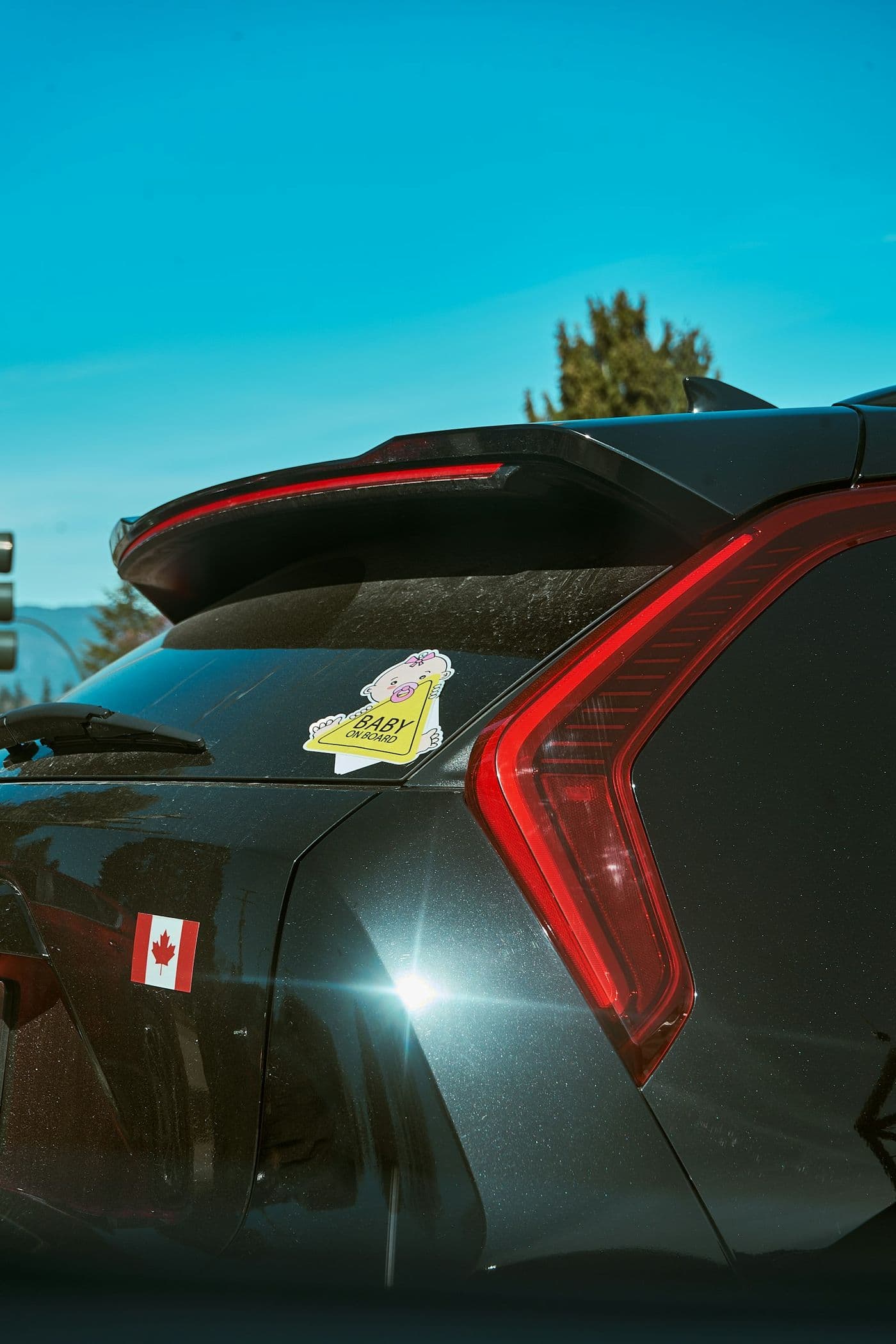
On factory paint in good condition: no. A modern clear coat is a hard, fully-cured chemical finish, and quality vinyl stickers — including our bumper stickers and vinyl decals — use adhesives designed to release from it cleanly. Stick, enjoy for years, remove with the method above, wax, done.
The honest caveats, because they're real: repainted or touched-up panels are riskier, since aftermarket paint that wasn't fully cured when the sticker went on can bond to the adhesive. Paint that's already oxidizing, peeling, or chipped can lift further when anything adhered to it comes off. And a sticker baked on through many summers holds harder than a recent one — budget more heat and more patience, not more force.
One more effect that looks like damage but isn't: the ghost outline. The paint under a sticker is shielded from UV while everything around it fades, so removing a years-old sticker can reveal a slightly more vivid patch. That contrast is sun damage to the surrounding paint — polish and time blend it, and garaged cars barely show it.
Will wall stickers damage paint or wallpaper when removed?
Walls are the surface where the answer depends most on what you stuck to them. Purpose-made wall decals use a removable, low-tack adhesive rated for painted drywall — warmed gently and peeled slowly at a low angle, they come off clean. A regular permanent-adhesive sticker on a wall is a different gamble entirely, which is why wall-rated adhesive exists.
Surface condition sets the risk. Glossy and satin paint in good shape release well. Flat and matte finishes hold pigment loosely enough that any adhesive can pull color off. Paint younger than about 30 days hasn't finished curing and will peel with the sticker. Wallpaper is the most fragile of all — its printed facing can delaminate from the backing, so treat any sticker on wallpaper as potentially permanent.
Removal on walls is heat-and-patience only: no solvents, which stain paint and soak into wallpaper. Warm the decal a few seconds, peel back over itself slower than feels reasonable, and re-warm the moment you feel resistance. Any small tacky spots left on sound paint come off with a barely-damp cloth and dish soap. Our own answer to “will they leave residue?” lives on the FAQ page: stickers are designed to remove cleanly from most smooth surfaces — and now you know the technique that makes “most” into “nearly all.”
Keep learning
Removing one to make room for the next?
Get the size right this time — here's what actually fits a laptop, a bottle, a bumper, and everything in between.
Read the size guide