
The short answer
When in doubt, order 3 inches— it's the most popular sticker size for a reason: big enough to read across a room, small enough for a laptop, a bottle, or a hand-out at an event. From there, adjust by surface: 2–3″ for laptops, 2–2.5″ for water bottles, 11.5″ × 3″ for bumpers, and about half the container width for packaging labels.
Sticker size chart by use
One thing to know before reading any size chart: a sticker's quoted size is its longest side. A wide logo ordered at 3″ arrives 3″ wide and maybe 1.5″ tall; a tall design arrives 3″ tall. Keep your artwork's proportions in mind as you scan the chart.
These are the ranges we'd recommend to a friend, with the product that fits each job:
| Where it's going | Recommended size | Best product |
|---|---|---|
| Phone case | 1″ – 1.5″ | Die cut stickers |
| Journal, planner, notebook | 1″ – 2″ | Sticker sheets |
| Water bottle or tumbler | 2″ – 2.5″ | Die cut stickers |
| Laptop lid | 2″ – 3″ | Die cut stickers |
| Handouts, giveaways, events | 3″ | Die cut stickers |
| Small jars, pouches, bags | 2″ round or square | Product labels |
| Boxes, tubs, shipping mailers | 3″ – 4″ | Product labels |
| Skateboard, cooler, toolbox | 4″ – 5″ | Die cut stickers |
| Car bumper | 11.5″ × 3″ | Bumper stickers |
| Car or business window | 4″ – 6″ (or lettering to fit) | Vinyl lettering |
| Interior walls | 12″ and up | Wall decals |
What size sticker is best for a laptop?
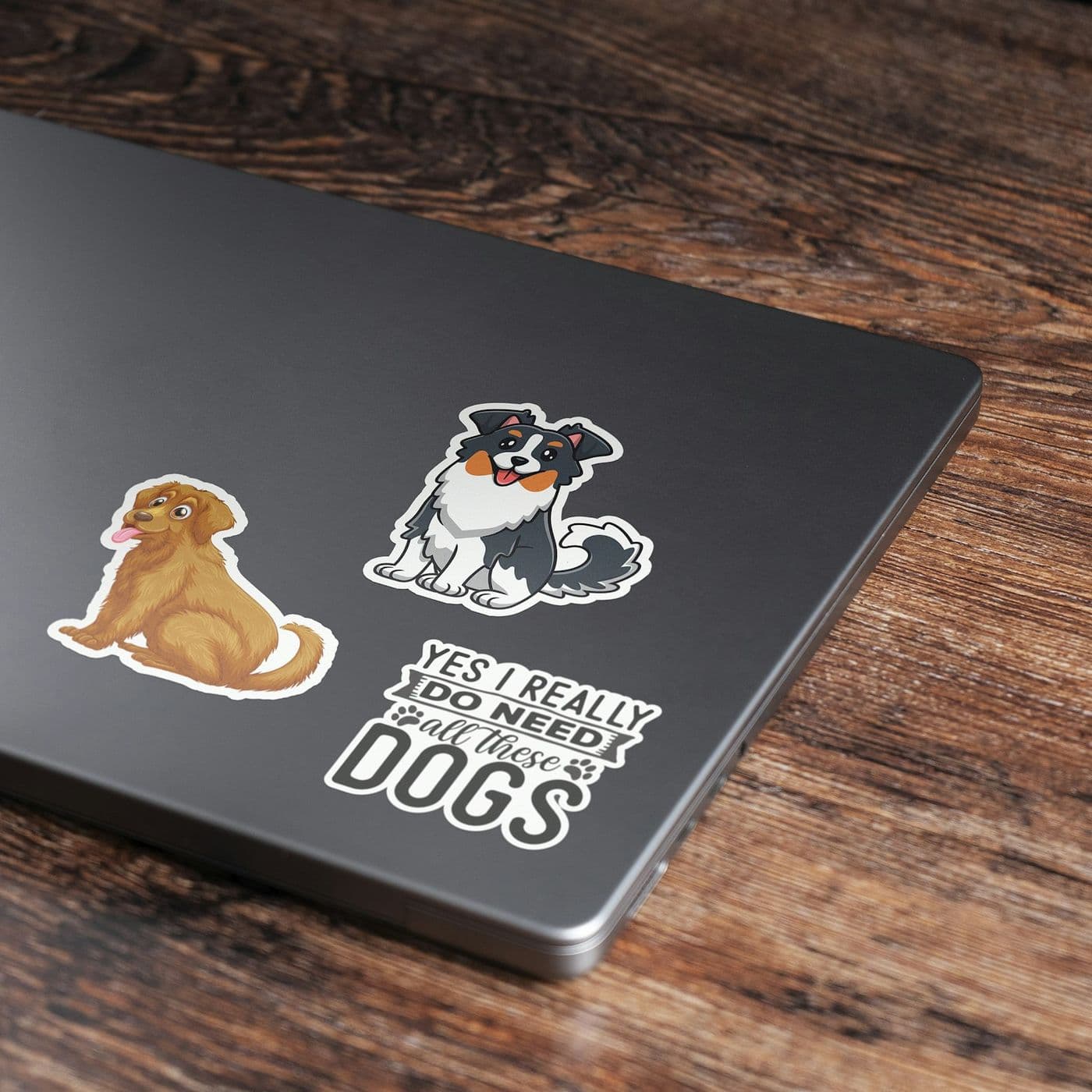
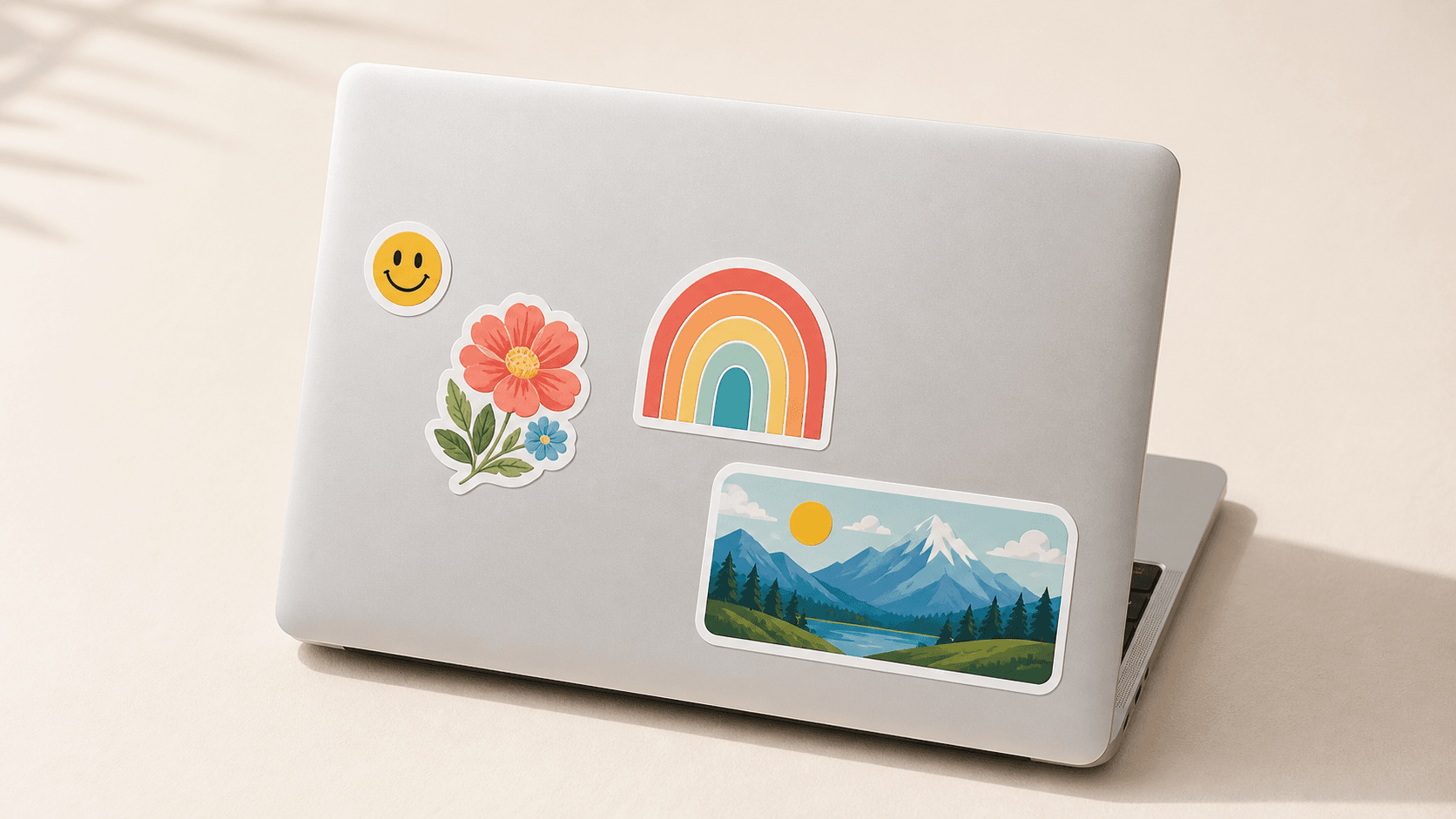
Two to three inches. A 13-inch laptop lid is roughly 12″ × 8.5″ of usable space, and a 3″ sticker occupies just enough of it to read clearly across a coffee shop without turning the lid into a billboard. It's the size we'd print for a single favorite design.
Building a collage instead? Drop to 2″. Six to ten 2″ stickers tile a lid comfortably, while the same count at 3″ starts overlapping. And if one sticker is meant to be thestatement — a band logo, a business mark — 4″ centered on the lid carries it.
Every size here works as a die cut sticker, and the cut style doesn't change the sizing math — though if you're unsure which cut you want, our die cut vs kiss cut guide settles that one.
What size sticker is best for a water bottle?
Two to two and a half inches — and the reason is geometry, not taste. A standard bottle is about 2.75″ in diameter, which means any sticker wider than roughly 3″ has to wrap visibly around the curve. Vinyl tolerates a gentle bend, but the wider the sticker, the more its edges fight to lift, and edges are where every sticker failure starts.
Designs that are taller than they are wide use bottle real estate especially well — a 2″-wide, 3″-tall sticker sits almost flat while reading large. Slim cans and skinny tumblers push the limit down further: stay under 2″ wide there.
What is the standard bumper sticker size?
The classic American bumper sticker is 11.5″ × 3″ — the proportion every campaign sticker and national-park souvenir has used for decades. It exists because it works: at that size, a short line of text stays readable from about one car length behind.
Our bumper stickers come in three sizes: a compact 7.5″ × 3.75″ for shorter messages and hatchbacks, the classic 11.5″ × 3″, and an oversized 15″ × 3.75″ for maximum reach. All three are printed on the same laminated vinyl rated for 5+ years outdoors.
Sizing rule for the text itself: at highway distance, every inch of letter height buys roughly ten feet of readability. If the message matters, make the letters at least 1″ tall — which is exactly why the classic size is 3″ deep.
What size should product packaging stickers be?
The working rule: a label looks intentional at one-half to two-thirds of the container's visible flat width. Smaller reads as an afterthought; larger wraps corners and curves it was never meant to cross. Measure the flat area — not the container — and size inside it.
- Small jars, tins, and pouches: 2″ round or square. The workhorse of farmers-market packaging.
- Standard jars, bottles, and boxes: 2.5″–3″, round for lids, rectangular for faces.
- Large tubs, candles, and shipping boxes: 3″–4″, where a logo sticker doubles as branded tape.
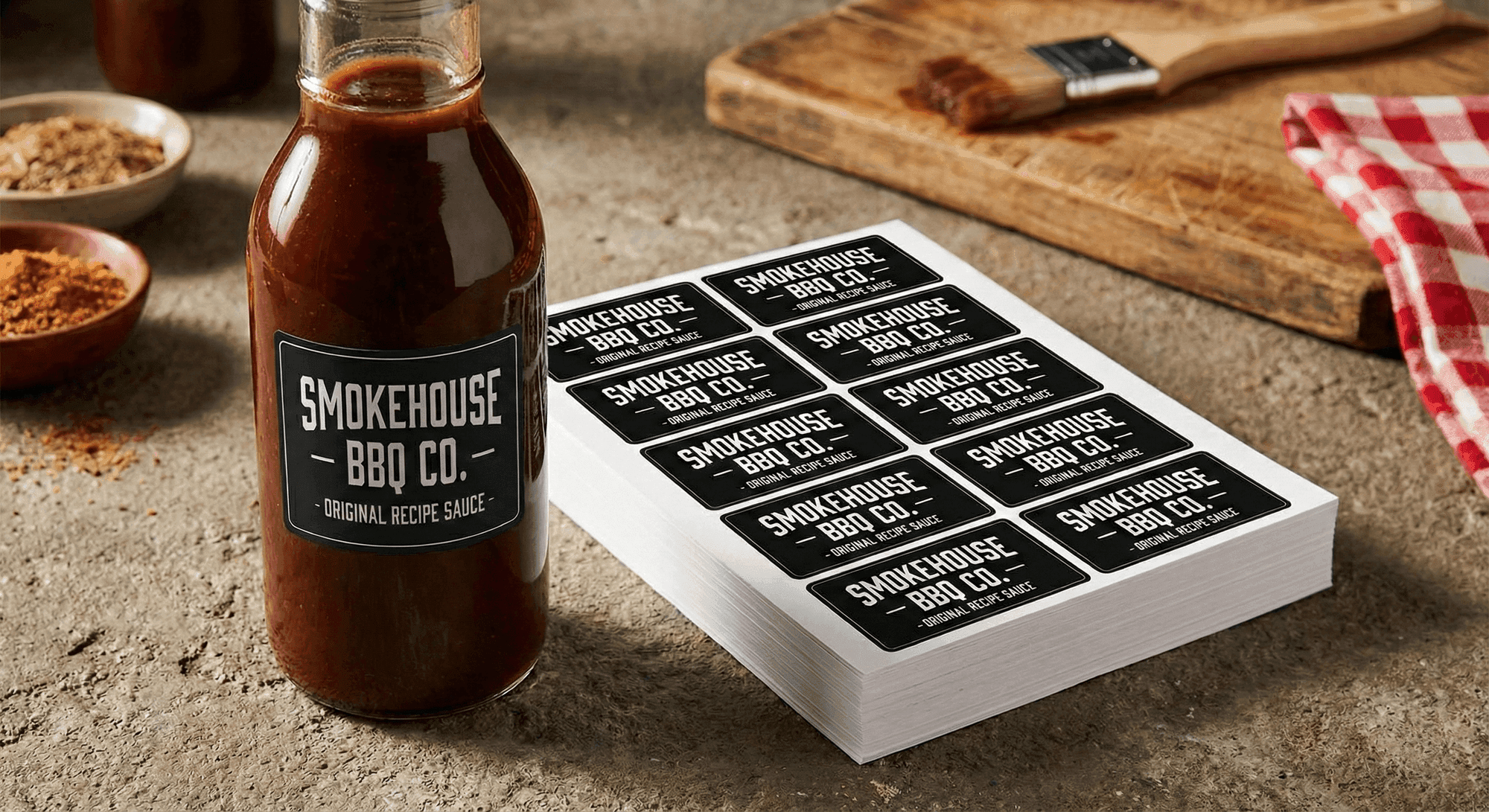
For packaging runs, order product labels on sheets rather than individual die cuts — they peel faster when you're labeling a hundred jars, and clear labels give the printed-on-the-jar look on glass.
How do I decide what sticker size to order?
Skip the agonizing and run the paper-cutout test: cut a piece of paper to the size you're considering, tape it where the sticker will live, and step back. Thirty seconds of looking answers what no chart can, because you're seeing the actual size in the actual spot.
Three checks before you order:
- Match the longest side to your artwork's shape. Wide designs spend their inches on width, tall designs on height. Check which way yours leans before picking a number.
- Respect the smallest detail. Thin lines and small text that look fine on screen disappear below about 0.1″ printed. If your design has fine print, size up until the fine print isn't fine anymore.
- Flat surface, flat sticker. Any curve tighter than a bottle wants a sticker under 2.5″ wide. Flat surfaces have no upper limit except taste.
Every product page prices sizes live — pick a size in the calculator on any custom sticker page and the built-in size guide shows your choice at true scale on a laptop, phone, and tennis ball for reference.
What are the smallest and largest stickers you can print?
Standard sizes run 2″ to 5″ on every sticker product, with custom width and height available on all of them. Below about 1″, printing still works but design stops cooperating — outlines merge and text becomes texture — so we treat 1″ as the practical floor, mostly for sticker sheet elements like planner icons.
At the top end, sticker sizing hands off to large format. Bumper stickers reach 15″, wall decals and floor graphics run to 48″ × 48″ and beyond by quote, and vinyl lettering for storefronts is cut to whatever the window calls for. Same printer, same laminated vinyl — just measured in feet.
So the honest range is 1″ to 4 feet. If your project sits outside the calculator's presets, send us the dimensions and we'll quote it.
Keep learning
Size sorted — now pick the cut.
Die cut and kiss cut cost the same and last the same, but they arrive differently and flatter different artwork. Two minutes settles it.
Read the guide